Thai Deep Tissue for Back, Neck and Shoulders in Ipswich
That nagging pull between your shoulder blades, the stiff neck that makes reversing the car awkward, the dull ache across your upper back by mid-afternoon.
If those sensations sound familiar, they are not random. They are the result of specific muscles in your upper body that have been held in shortened, overloaded positions for long enough that they have stopped releasing on their own.
Thai deep tissue massage for back, neck and shoulders at Baan Thai Wellness in Ipswich is built around understanding exactly which muscles are involved and working on them in the right sequence to create a lasting change rather than temporary relief.
Why Upper Body Tension Is So Hard to Shift
The muscles of the upper back, neck and shoulders are among the most persistently overloaded in the body, and understanding why helps explain why general massage often falls short.
The upper trapezius runs from the base of the skull down to the shoulder and is the muscle most people point to when they say their shoulders are up around their ears.
It is designed to lift the shoulder blade and rotate the head, but in people who sit at desks or drive for long periods it is in a state of near-constant low-level contraction, holding the head up against gravity all day long.
The levator scapulae connects the top of the shoulder blade to the upper cervical vertebrae and is responsible for the sharp, pinching ache many people feel between the neck and the shoulder when they turn their head.
When it shortens, it pulls the shoulder blade upward and rotates the neck away from the painful side, which is why people often find themselves unconsciously tilting their head to one side by the end of a long working day.
The rhomboids, sitting between the shoulder blades, are chronically overstretched and weakened in anyone with rounded shoulders.
They produce the burning, aching sensation between the shoulder blades that builds through the afternoon, but the cause is not weakness in the rhomboids themselves. It is the shortening of the pectoralis minor at the front of the chest, which pulls the shoulders forward and keeps the rhomboids in a state of constant strain.
Working only on the back without also addressing the chest and front of the shoulders is one of the reasons upper back tension keeps returning after treatment.
In the neck, the scalenes and sternocleidomastoid run along the sides and front of the cervical spine.
These muscles are involved in turning and flexing the head, but they also become tight in response to stress, shallow breathing and prolonged screen use.
When they shorten, they compress the cervical vertebrae and can contribute to the tension headaches that build from the base of the skull forward.
The Forward Head Posture Problem
One of the most significant drivers of upper body tension for desk workers and drivers is forward head posture, and the physics of it are worth understanding.
An adult head weighs roughly 10 to 12 pounds in a neutral position, sitting directly over the cervical spine.
Research published in the journal Surgical Technology International found that for every inch the head moves forward from this neutral position, the effective load on the cervical spine increases by approximately 10 pounds.
Most people working at a screen hold their head two to three inches forward of neutral without realising it.
That means the muscles of the neck and upper back are effectively managing 30 to 40 pounds of load rather than 10 to 12, for hours at a time, every working day.
This is not a posture problem that can be fixed by sitting up straight for five minutes.
The muscles involved have adapted to this position over months or years, shortening and thickening to manage the load, and they need targeted hands-on work to begin releasing.
How Thai Deep Tissue Massage Addresses the Upper Body
Thai deep tissue massage for the back, neck and shoulders works through a specific approach that is different from treating the lower body.
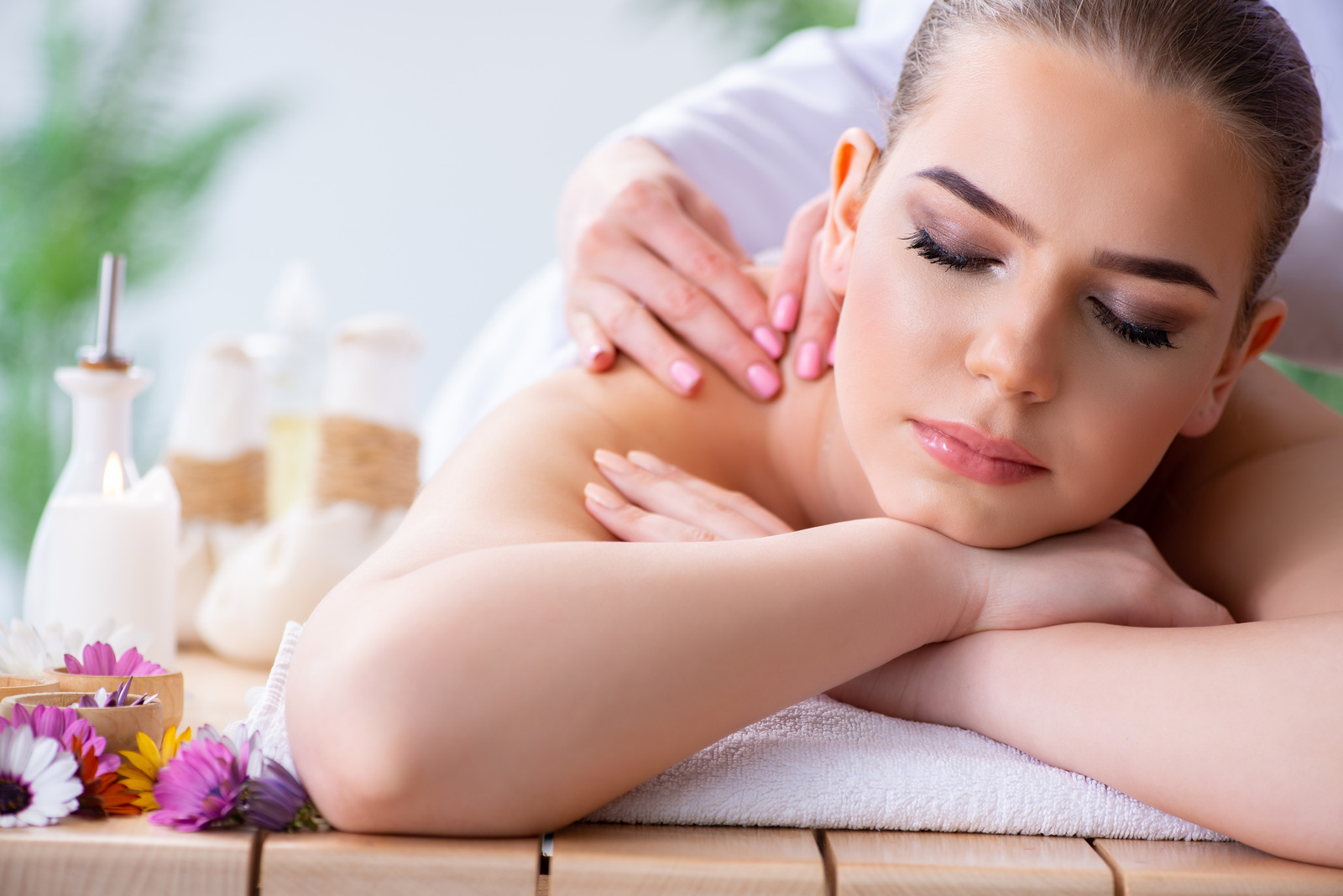
Your massage therapist begins with palm compressions and acupressure along the upper back, working through the trapezius and rhomboids to warm and soften the tissue before any deeper work begins.
Once the surface layers have responded, your massage therapist moves into the deeper structures, using careful thumb pressure along the levator scapulae from the shoulder blade up toward the cervical attachments, and slow elbow or forearm work along the rhomboid lines running parallel to the spine.
This order matters. Going deep before the surface is ready forces the muscle to guard rather than release, which produces discomfort without the corresponding change in tissue.
The front of the body is then addressed through gentle passive stretching that opens the chest and lengthens the pectoralis minor.
This is the part most massage treatments leave out, and it is why the burning between the shoulder blades tends to return within a day or two after treatment that only works from behind.
For the neck, your massage therapist works carefully along the scalenes and sternocleidomastoid using slow, precise finger pressure rather than firm compression, as these muscles sit close to sensitive structures and require a more careful approach.
The suboccipital muscles at the base of the skull, where tension headaches so often originate, receive sustained gentle pressure that encourages the cranial base to decompress and the headache pattern to ease.
Where hot stone combination is chosen, warmed basalt stones are used along the upper back and shoulders before the deeper work begins, allowing the heat to soften the tissue more effectively than compression alone and making the session more comfortable for people whose upper body tension tends to be particularly resistant.
What You Can Expect to Notice
The most immediate change most people notice is in the neck.
Rotation that felt restricted or sharp when turning the head often feels noticeably freer by the end of the session, because the levator scapulae and scalenes have released enough to allow the cervical joints to move through their full range.
The burning between the shoulder blades typically eases as the rhomboids come out of their overstretched, contracted state and the chest opens enough to reduce the forward pull on the shoulder blades.
Tension headaches that originate in the neck and base of the skull often reduce or clear entirely following focused suboccipital and cervical work.
Over a course of regular sessions the postural pattern itself begins to shift.
The head sits further back over the shoulders, the chest feels more open, and the constant background effort of holding yourself up against gravity begins to reduce because the muscles involved are no longer fighting against shortening in the opposing structures.
“I walked in with burning pain between my shoulder blades and constant headaches. I walked out feeling taller, lighter and able to move my neck without wincing.” — Baan Thai Wellness client
Session Lengths and Pricing
Sessions are available in three lengths depending on how much needs to be addressed.
A 60-minute session at £60 suits focused work on one primary area such as the neck and shoulders alone.
A 90-minute session at £85 allows time to cover the full back, neck and shoulders together and to work into connected areas such as the hips where tension is contributing to the upper body pattern.
A 120-minute session at £110 gives your massage therapist time for very detailed work across all areas, including chest opening, suboccipital release and any secondary tension in the arms or jaw.
There is a 10% discount on all treatments booked for Tuesdays, which makes building a regular course of sessions more affordable.
If your tension is deep or has been present for a long time, a longer session will typically produce better results than a shorter one, as the upper body requires a careful warm-up phase before the deeper structures can be effectively addressed.
Ready to Book Your Session at Baan Thai Wellness?
If your upper body has been carrying tension that has not shifted with stretching, heat or lighter massage, Thai deep tissue for back, neck and shoulders in Ipswich at Baan Thai Wellness is worth booking.
Call 01473 875154 or book online through our website.
You will find the clinic at 26 Dashwood Close, Pinewood, Ipswich, IP8 3SR, with free allocated parking directly outside.
Sessions are available Monday to Friday 10:00 to 19:00 and Saturday 10:00 to 16:00.