How Baan Thai Wellness Compares to Ipswich Spa Days
If you’ve been searching for a spa day in Ipswich or Suffolk and wondering whether Baan Thai Wellness is a better fit for you, you’re in the right place.
This guide breaks down the real differences, not just the marketing language, so you can make a decision that actually suits your body and your budget.
A spa day and a Thai massage session are not the same thing.
They’re built around completely different purposes, and once you understand that distinction, the choice becomes a lot clearer.
Who’s Usually Searching for This?
Most people landing on this page fall into one of two camps.
The first group is looking for a treat. A birthday gift, a catch-up with a friend, or simply an excuse to switch off for a few hours.
A traditional spa day makes perfect sense for that. Robes, pools, herbal tea, a light facial. It’s enjoyable, and there’s nothing wrong with it.
The second group has a specific problem. Their neck has been locked up for weeks.
Their lower back tightens every time they sit for longer than an hour. They leave work on a Friday with a headache that doesn’t lift until Sunday.
They’ve tried the spa day before and felt relaxed for an afternoon, but the stiffness was back by Monday morning.
If you’re in that second group, this article is especially for you, because a traditional spa day and a specialised Thai massage session address very different things.
Knowing which you need can save you both money and frustration.
What a Traditional Spa Day in Ipswich Actually Gives You
A classic spa day is designed around atmosphere and variety.
You pay for access to facilities, typically a heated pool, steam room, sauna, and relaxation lounges, plus one or two shorter treatments fitted in between.
The massages offered are most commonly Swedish-style. Long, flowing strokes with scented oils that work on the surface of the muscles and calm the nervous system.
That’s genuinely useful if you’re stressed and need to slow down. But Swedish massage doesn’t go deep into chronic tension.
It isn’t designed to work through layers of stiffness that have built up over months of desk work or long drives.
Spa days work well for gifts and special occasions, for social outings where the setting matters as much as the treatment, and for anyone who wants variety rather than one focused session.
The value is largely experiential. You’re paying for a beautiful setting, a full day’s access, and a sense of occasion.
That’s a completely legitimate thing to want. But if you’re carrying real physical tension or pain, you’ll likely walk out feeling temporarily relaxed rather than meaningfully better.
What Baan Thai Wellness Does Differently
Baan Thai Wellness is a therapeutic practice, not a spa. The difference matters.
Every session begins with a conversation. Before any hands-on work starts, your therapist talks with you about where you’re holding tension, your medical history, any injuries or chronic conditions, and your daily habits.
That consultation shapes the entire session. Someone with persistent neck pain will receive a very different treatment to someone whose main complaint is heavy legs from standing all day, even if both sessions last the same amount of time.
This is the heart of authentic Thai massage. It isn’t a routine, it’s a response to your body on that particular day.
The Sen Line Approach
Traditional Thai massage is built on the concept of the Sen lines, known in Thai as Sen Sib, meaning the ten primary energy lines that run through the body.
These are similar in concept to meridians in traditional Chinese medicine or nadis in Ayurvedic practice.
Thai massage therapists are trained to work along these lines using a combination of acupressure, rhythmic compression, and assisted stretching to release blockages and restore movement.
In practical terms, this means your therapist may use their thumbs, palms, forearms, and elbows to work into specific areas rather than simply stroking over them.
The work is active and dynamic, not passive. Clients who’ve only experienced Swedish massage sometimes describe traditional Thai massage as surprisingly firm, but also surprisingly effective.
The Treatments Available
Traditional Thai Massage uses rhythmic pressure along the Sen lines combined with assisted yoga-like stretches.
It’s performed fully clothed on a mat and is particularly effective for people who feel stiff, restricted, or unable to turn their head or twist their spine freely.
Deep Tissue and Soft Tissue Massage applies more sustained, targeted pressure to stubborn knots. The kind that build up between the shoulder blades after weeks of hunching over a screen.
If you regularly drive long distances or sit at a desk for most of the working day, this is likely the treatment that will make the most noticeable difference.
Hot Stone Massage uses heated basalt stones to warm tight muscles before deeper work begins.
The heat allows muscles to soften more quickly, making the overall session both more effective and more comfortable for people with particularly deep-set tension.
Reflexology focuses on the feet and lower legs, working specific pressure points that correspond to areas throughout the body.
It’s especially popular with people who spend long hours on their feet, as well as those who find full-body massage uncomfortable.
Head Massage targets the scalp, neck, and upper shoulders, the classic tension triangle for anyone who spends extended time looking at screens.
It’s also used to ease tension headaches and jaw tightness from grinding or clenching.
Even the more relaxing treatments at Baan Thai Wellness, including gentle relaxation massage and Swedish massage with essential oils, are delivered with a therapeutic eye.
Rather than simply stroking over the muscles, therapists continue to observe and address tension patterns throughout, so the session is never purely passive.
The Science Behind It
Research on massage therapy does show genuine benefits, though the evidence is nuanced and worth understanding clearly.
The National Center for Complementary and Integrative Health, part of the US National Institutes of Health, notes that massage therapy has demonstrated short-term benefits for neck and shoulder pain and that it may help reduce anxiety and improve mood.
Clinical guidelines from the American College of Physicians also include massage as an option for treating acute and subacute low-back pain.
The key word across much of this research is short-term. That’s why regular sessions matter.
A single visit can produce real relief, but the long-term gains come from consistent care over time, just as they would with physiotherapy or exercise.
Thai massage specifically involves two things that standard massage does not always include, which are assisted stretching and sustained acupressure along the Sen lines.
The stretching component helps joints move through their full range of motion, which is particularly valuable for people whose movement has become limited by chronic muscle tightness.
If you’ve ever felt as though you can’t turn your head properly or that your hips feel locked when you walk, that restricted range of motion is precisely what traditional Thai massage is designed to address.
Value for Money
A spa day in the Ipswich area can range considerably in price depending on the venue.
Budget packages at a local gym or hotel start at around £40 to £60, but a half-day experience at a more premium site, including poolside time, multiple treatments, and a meal, can reach £100 to £200 or more per person.
For a social occasion, that cost can feel very reasonable. For a physical complaint, it’s a significant outlay with no guarantee of therapeutic result.
Sessions at Baan Thai Wellness are typically priced between £30 and £50, depending on the treatment and duration.
That’s often less than a single physiotherapy or osteopathy appointment, and the session is fully dedicated to hands-on therapeutic work for the entire time you’re there.
There’s also a practical efficiency to consider. Because one session can address multiple related complaints at once, such as neck pain, tension headaches, restricted shoulder movement, and general stress, you’re not spreading the cost across separate appointments with separate practitioners.
Regular Thai massage has also been found to support improved flexibility, better quality sleep, and reduced accumulation of muscle tension over time.
For office workers in particular, consistent monthly sessions often translate to fewer headaches, more comfortable typing posture, and less reliance on over-the-counter pain relief.
Practical Considerations
Baan Thai Wellness offers flexible appointment times, including sessions that fit into a lunch break or straight after work.
You don’t need to block out a full day, which for busy professionals or parents can be the deciding factor in itself.
Allocated parking is available directly outside the clinic, so you’re not circling streets or worrying about a meter running out before your session ends.
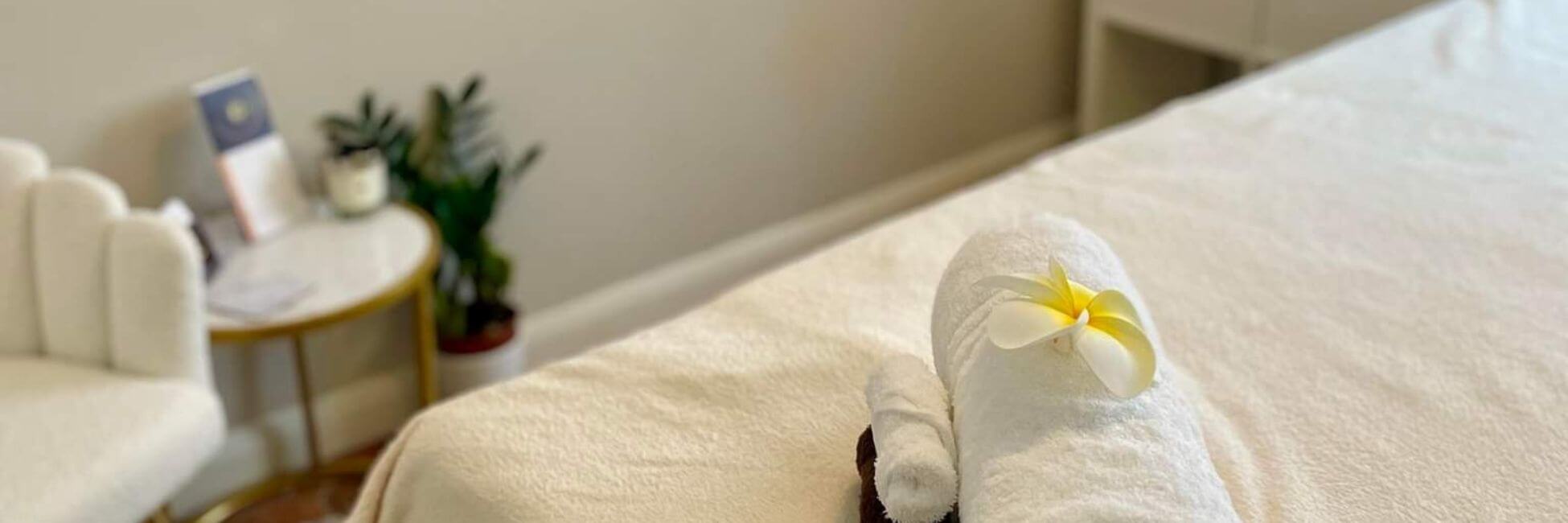
Treatments take place in a calm, simply furnished private therapy room. There’s no shared changing area, no crowded poolside, and no social pressure.
Many people find this considerably more comfortable than a large spa environment, particularly if they’re attending alone or dealing with a condition they’d rather not discuss in a communal setting.
So Which Should You Choose?
A traditional spa day makes most sense if you want a social experience, a special occasion gift, or a full day of gentle variety in a beautiful setting.
There’s real value in that, it just isn’t therapeutic in the clinical sense.
Baan Thai Wellness makes most sense if you have a specific physical complaint such as neck pain, back stiffness, tension headaches, restricted movement, or heavy legs.
It’s also the better choice if you’ve tried a standard spa massage and found the relief didn’t last, or if you want your time and money to make a lasting difference to how your body actually feels day to day.
The difference isn’t about luxury versus budget. Baan Thai Wellness isn’t a compromise option. It’s a different kind of care entirely.
Authentic Thai therapeutic techniques, a personalised approach, a calm and private setting, and clear pricing between £30 and £50 make it both accessible and genuinely effective for people dealing with the kinds of physical tension that build up quietly over a working week.
If your body has been telling you something needs to change, a consultation at Baan Thai Wellness is a sensible next step.
Consistent therapeutic care has a compounding effect. The relief you feel after one session tends to last longer after your second, and longer still after your third.
That’s not marketing language. It’s simply how muscles respond when they’re given consistent attention rather than occasional pampering.
Baan Thai Wellness serves clients across Ipswich and Suffolk. To find out which treatment is most suitable for your needs, get in touch to discuss your concerns before booking your first session.