Foot Reflexology in Ipswich for People on Their Feet All Day
By the time a long shift ends, it can feel as if your feet are made of bricks.
Your calves throb, your lower back nags, and even your neck and shoulders carry the weight of every step.
For nurses, teachers, shop staff, hospitality workers and anyone else on their feet for most of the day, this is not an occasional bad day.
It is a daily pattern that quietly wears the body down.
Foot reflexology in Ipswich at Baan Thai Wellness offers a focused, practical way to address that pattern at its source.
What Foot Reflexology Is and How It Works
Foot reflexology is different from a foot massage.
It’s a structured therapy based on the principle that your feet contain a detailed map of the whole body, with specific zones on the soles, toes and sides of each foot corresponding to organs, glands and body systems elsewhere.
One area of the foot corresponds to the lower back. Another to the neck and shoulders. Another to the digestive system.
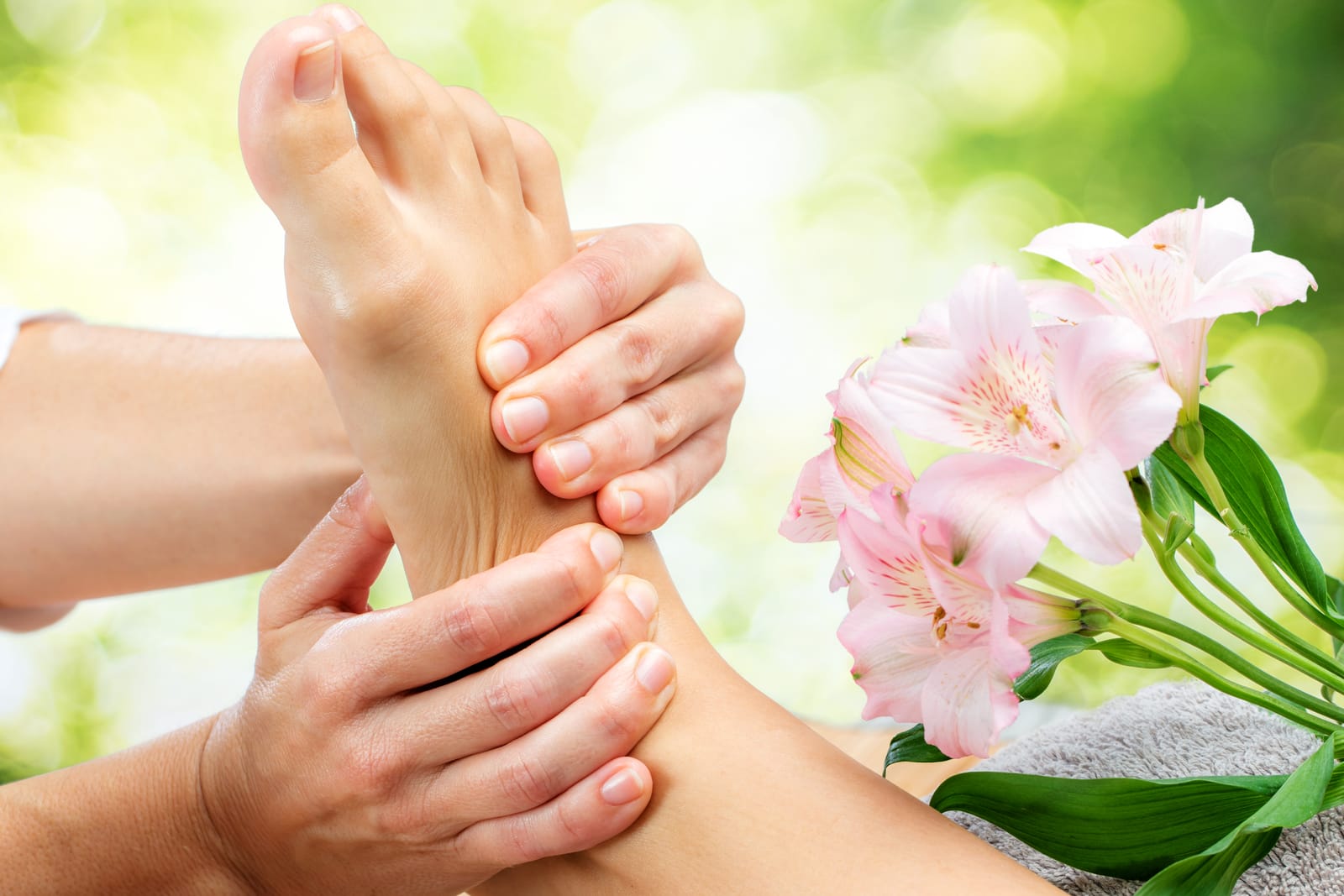
During a session, your massage therapist works through these zones using a technique called zone walking, which uses precise, steady thumb and finger pressure applied in a planned sequence across each reflex area in turn.
This is not a general foot rub.
Every movement is deliberate and the sequence is structured to work through the whole body systematically rather than just the parts that feel sore.
When a particular reflex point feels tender or slightly gritty under the skin, that texture is considered an indicator of tension or congestion in the corresponding body area.
Extra time is spent on those points, with gentle repeated pressure helping them settle and encouraging the connected body system to function more smoothly.
The underlying aim is to support the body in returning to a state of natural balance, sometimes referred to in reflexology as homeostasis, where rest, repair and energy restoration can happen more efficiently.
“There’s limited high-quality evidence that reflexology treats medical conditions, but it may help reduce stress and help you relax.” — NHS Inform
Reflexology is not a replacement for medical care. For many of you, though, it’s a genuinely useful complement to it, particularly when long-term tension and stress are part of the picture.
Why Reflexology Is Particularly Effective for People Who Stand All Day
Standing or walking for hours does not just cause sore feet. It changes how the whole body loads and moves.
Tension builds from the ground up.
Tight plantar fascia and compressed arches alter the angle of the ankle, which shifts the knee, which changes how the hip sits, which pulls on the lower back.
By the time the discomfort shows up as shoulder tension or a nagging headache, it has travelled a long way from where it started.
Reflexology works at the base of that chain.
By releasing tension in the muscles, ligaments and reflex points of the feet, it reduces the strain that travels upward through the legs and spine.
As the feet soften and the arch and heel reflex points are worked, the body’s postural load often shifts toward a more natural distribution, which takes pressure off the joints above.
Active jobs also slow circulation in the lower legs. Blood and lymph fluid pool around the ankles by the end of a long shift, creating that familiar swollen, heavy feeling.
The rhythmic compression and release used in zone walking actively encourages lymph and blood movement through the lower legs, often leaving them feeling noticeably lighter within a single session.
There is also a nervous system dimension that is specific to people in high-demand roles.
Healthcare workers, teachers and hospitality staff spend their days in a state of constant responsiveness, managing other people’s needs while staying physically active.
A reflexology session gives the nervous system a clear, unambiguous signal to shift from high alert into a parasympathetic state, which is something that is genuinely difficult to achieve through willpower or rest alone at the end of a demanding day.
Specific Conditions That Respond Well to Reflexology
People in standing roles present with a recognisable cluster of physical complaints that reflexology is well placed to address.
Plantar fasciitis and heel pain are among the most common.
Direct work on the heel reflex and the arch of the foot, combined with attention to the spinal reflex that runs along the inner edge of the sole, can ease the tightness in the plantar fascia and reduce the sharp morning pain that makes the first steps of the day so uncomfortable.
Sore arches and tight calves respond to the rhythmic compression that zone walking applies to the lower leg reflexes and the diaphragm line across the middle of the foot.
When these zones soften, the calves often release tension they have been holding since early in the shift.
Aching lower back is addressed through the spinal reflex zone running along the inner border of both feet from heel to big toe, as well as the specific lumbar and sacral points on the heel.
Many people notice a loosening in the lower back during the session itself, even though nothing has touched it directly.
Neck and shoulder tension is reached through the toe reflex zones, particularly the base of the big toe and the ridge where the toes meet the ball of the foot.
If you carry your stress physically in your upper body despite spending the day on your feet, this connection is often the part of the session that will surprise you most.
What to Expect in a Session at Baan Thai Wellness
Reflexology is one of the few treatments at Baan Thai Wellness where you stay fully clothed throughout.
You remove only your shoes and socks, and if possible roll your trousers up to the knee.
Your message therapist usually begins with a gentle cleanse of the feet and a short relaxation sequence to warm the tissue and prepare the reflex zones before the work begins.
Using specific thumb and finger techniques, they work methodically through every zone on each of your feet, spending extra time on areas linked to your main concerns.
Some points may feel tender. Pressure is always kept within your comfort level and you are encouraged to say so if anything feels too strong.
A session runs between 45 and 60 minutes.
Reflexology can also be combined with Thai foot massage or focused lower leg work if broader coverage would be useful, and your massage therapist can advise on this during your initial consultation.
Understanding the Healing Response
Reflexology occasionally produces a short-lived reaction in the day or two after a session that is worth knowing about before your first appointment.
Some people feel more tired than usual, need the toilet more frequently, notice mild headaches or experience a brief mood shift.
This is sometimes called a healing response, and it reflects the body processing the changes that the session has set in motion rather than anything going wrong.
It usually settles within 24 to 48 hours.
Drinking plenty of water after your session, eating lightly, and allowing yourself a quieter evening supports the body through this phase and helps the benefits consolidate rather than dissipate.
Ready to Book Your Foot Reflexology Session in Ipswich?
If your feet, legs and back have been asking for proper attention and a quick stretch in the staff room is no longer cutting it, foot reflexology in Ipswich at Baan Thai Wellness is a practical next step that is worth exploring.
Sessions are available Monday to Friday 10:00 to 19:00 and Saturday 10:00 to 16:00, priced between £30 and £50.
Free allocated parking is directly outside the clinic at 26 Dashwood Close, Pinewood, Ipswich, IP8 3SR.
You can book online directly through our website or you’re welcome to get in touch with me, Jo, first to discuss whether reflexology or a combination treatment is the better fit for what you’re dealing with.